Nobody Pays Me to Fly
Building in the Dark
This is not a story about flying. It is a story about what flying is for
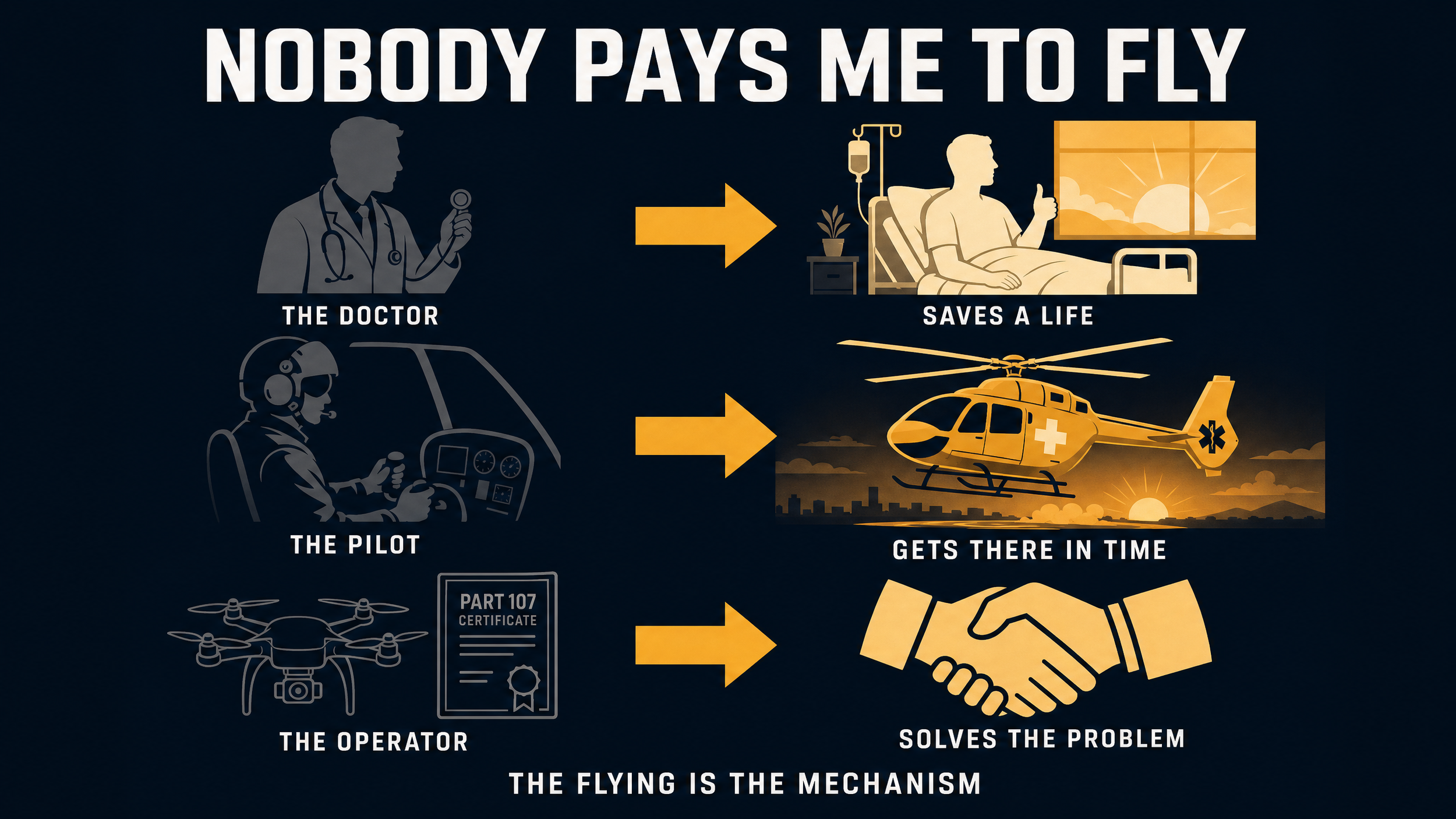
I fly medical helicopters. Nobody pays me to fly them. They pay me to help save a life. The flying is the mechanism.
A doctor is not paid for knowing medicine. A doctor is paid to save lives, and the knowledge is how they do it.
Our clients are no different.
Event and personal security does not care about a 3D model. They care about the intel it provides so they can plan better.
Critical infrastructure does not care about thermal images. They care about the analysis behind them, the kind that leads to more efficient repairs.
Construction does not care about volumetric capabilities. They care about knowing how many trucks it will take to haul the dirt off the site. The list goes on, and I think the point is made.
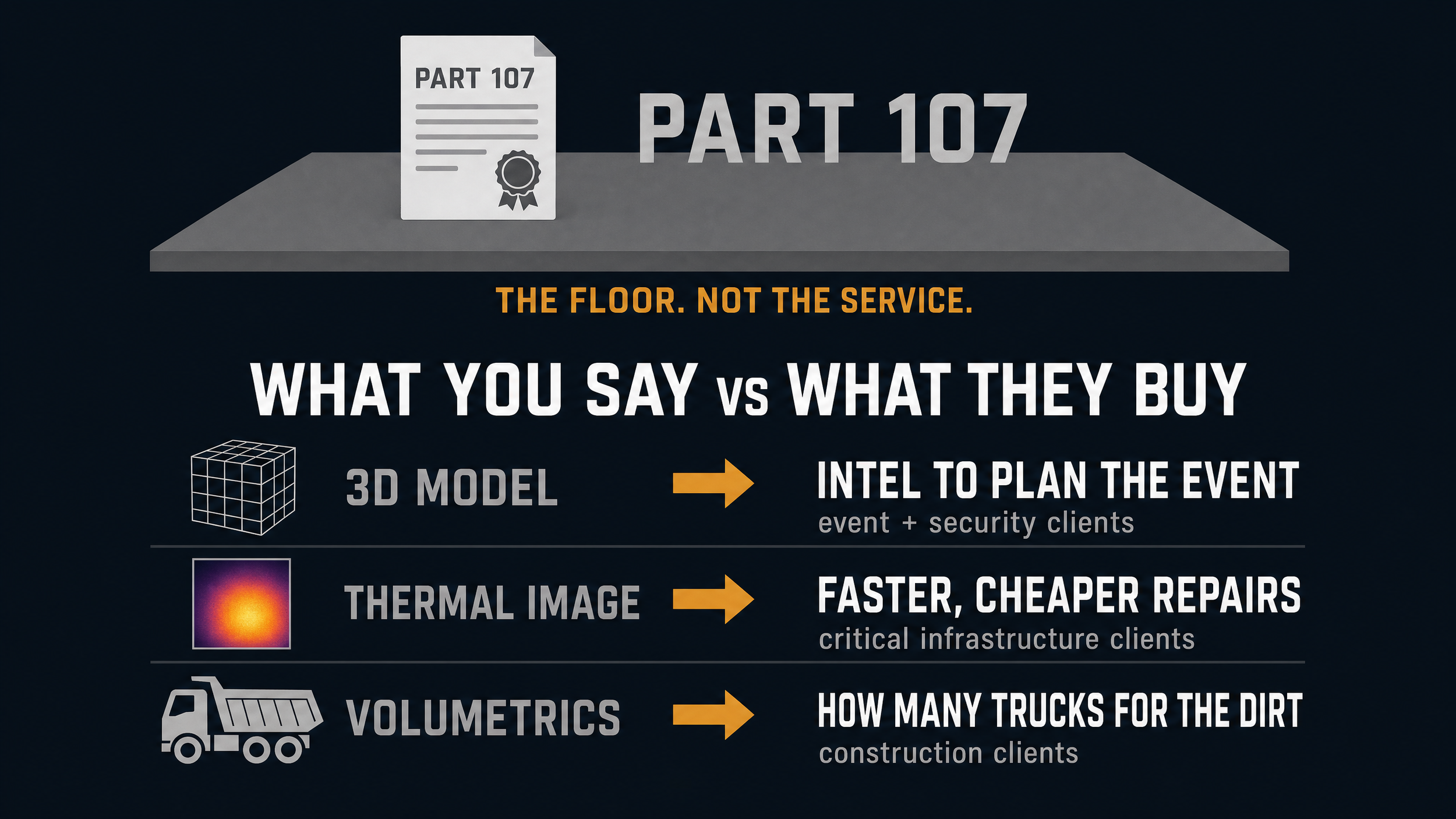
Your rating gets you to the starting line. It does not get you the job. Clients are not buying your deliverable. They are buying the problem you solve with it.
I bring this up because the drone industry has this wrong right now. Not one company here or there. The entire industry, top to bottom, is selling the mechanism. It is a big part of why so many of us are not closing as much work as we would like. The operators who understand they are selling the end state are the ones separating themselves from everyone else.
We spent a lot of energy getting FAA rated. And somewhere in that effort, we started talking like the rating was the thing we were selling. It is not. The rating is the floor. It is what makes everything else possible, but it is not the service. If your pitch to a client leads with Part 107, you are handing them a certificate when they came to buy an outcome.
We Are in the Education Business First
Everyone inside this industry understands exactly what is happening. Everyone is excited about the coming tech and the use cases. Walk into any drone expo, and the energy is real.
Then we walk out and try to sell to people who have no idea what drones are doing. Not a partial idea. No idea. The client base we are chasing does not know that a drone can find moisture under a roof membrane or map a job site to survey-grade accuracy. So before we ever sell a service, we are teaching a class. We find ourselves in the education space first, and as an industry we do a poor job of it. We keep talking to each other instead of to the customer.
And the organizations that do understand what is going on? They already have a team of operators in house. The rest do not know what they would be hiring you for.
Education has to run on more than one front. It means learning the client's needs before you ever quote the job, and it means raising the operators too. We teach Part 107 basics ourselves, and we tell every student the same thing this post is telling you: the certificate is the floor.
The Honest Part
I am going to be brutally honest with everyone here, and I am sorry in advance.
Most operators in this industry are trying to link themselves to real estate and events. It is the most saturated corner of the market, because it is the easiest use case for a client to understand and the easiest one for an operator to picture themselves doing. Everybody can see it.
Part 107 gave you one thing: the ability to fly a drone commercially. It did not give you the skills and knowledge to film. There is a difference between getting footage and getting footage that tells a story without the viewer even knowing they are listening to one. Footage that makes someone feel something. That takes framing and deliberate camera work, and that is just the filming half. The editing is equally important. Filming is what the story is. Editing is how it is told.
We did not get that lesson in Part 107, so we take shots of a roof and call it good. Nothing dramatic. No reveal from behind a tree line, no angle worked during a sunset. Just a roof with some cool music behind it. One more reminder: Part 107 is not the skill you are selling here. The camera work and the edit are. And even then, ask yourself... Is that video going to sell the house? That is what you are being paid to do. Not take a video of the house.
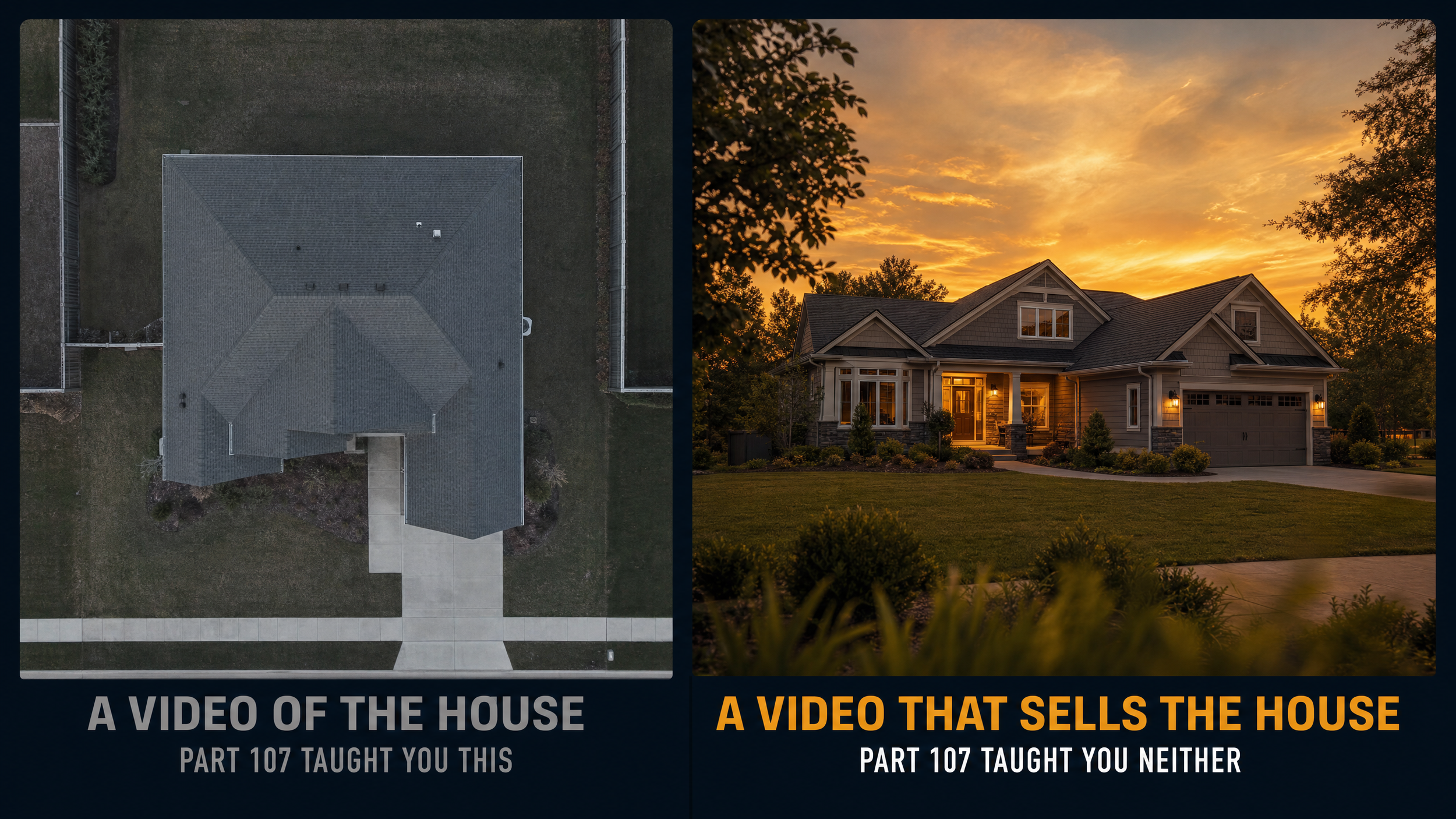
Part 107 taught you how to fly. It did not teach you either of these. Only one of them is worth paying for.
From there the services climb in difficulty, and the crowd thins with every step up. Mapping, thermography, inspection, survey work. The more complex the mission, the fewer people are flying it. The saturation problem solves itself the moment you commit to harder work. I wrote about this in The Illusion of a Saturated Drone Market, and I stand by it. The market is not full. The shallow end is.
Your First Drone Is Your First Pokemon
I do not think people understand the choice they are making when they buy a drone. Some think the cheapest drone will do everything. Others think the most expensive drone will do everything because it is expensive. Both are guessing.
Picking your first drone is like picking your first Pokemon. You are stuck with it. That aircraft defines what jobs you can take for a long while, until you can fund the next investment. Choose it based on the work you want, not the price tag in either direction.
I know everyone is worked up about the landscape changing, and I covered the DJI shift in The Great Reset. You can still fly DJI and Autel, for now. You just cannot fly them on jobs that require NDAA compliance. And that is okay. If your use case never touches those jobs, do not spend the money on an NDAA-compliant aircraft. The only issue here is that parts and batteries might start to become a factor. If it does, that hardware moves you into a category of work most operators cannot buy their way into. It keeps climbing from there. The sexy word right now is LiDAR, and plenty of people are saying it without a plan for it. Even LiDAR has an NDAA side. You could get into the cheap LiDAR game, and cheap LiDAR is still expensive as hell. But that price tag is also the point. Most operators will never pay it, so the ones who do have that work mostly to themselves. NDAA-compliant LiDAR costs more still, and the field thins again.
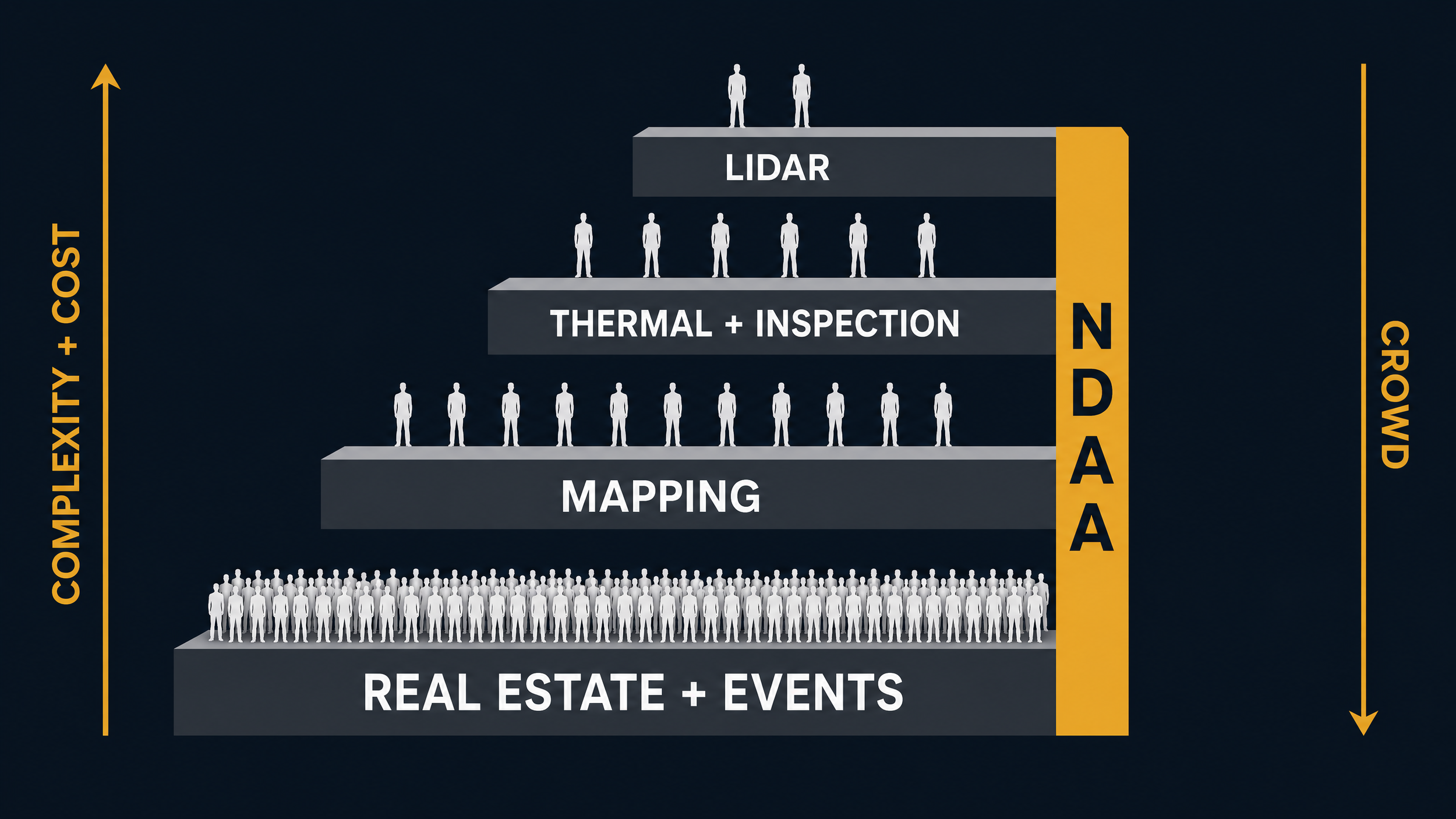
The market is not full. The shallow end is. Every level up, the work gets harder and the crowd thins. NDAA compliance is not a destination at the top. It is a layer that runs through all of it. The saturation problem solves itself the moment you commit to harder work.
Everyone Is Staring at Hardware
Have you thought about software?
Pix4Dmatic will process enormous datasets. It is built for volume. But if you are not flying jobs that produce that much data, is the higher cost doing anything for you? Companies like 3Dsurvey might fit what you are actually trying to do. Be honest about your needs. You might save in one area and spend more in another, and that is fine, because you will be set up for the world you are actually trying to build.
Start With the End in Mind
Who do you want to serve? What is the market there? Who is already in it? Answer those questions before you buy anything.
Your rating gets you to the starting line. Your drone and your software get you to a deliverable. None of it is the service. The service is the problem you solve for someone who could not solve it without you. That is what they pay for. Everything else is the mechanism.
Above. It. All.
