
I Gave Away the Part 107 Course
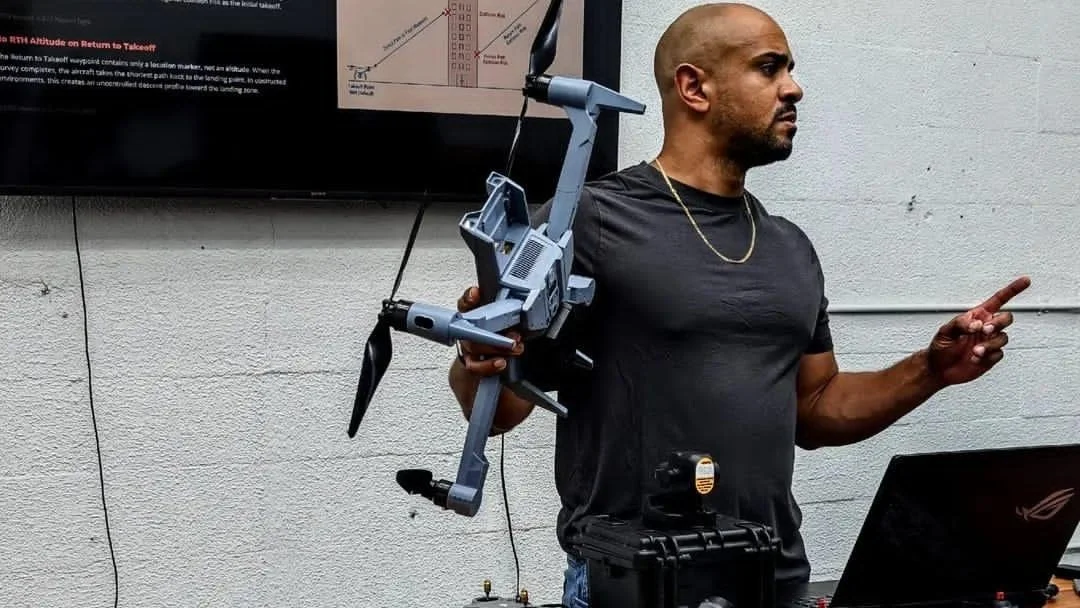
It took me close to 100 hours to build a five hour Part 107 workshop. I am giving it away.
I want to explain why, because the reason is the same reason I wrote Nobody Pays Me to Fly, and it leads somewhere most operators do not want to go.
The Floor Is Free
Spend ten minutes in any drone group online and you will find someone posting footage from inside controlled airspace, then asking in the comments whether they needed authorization for that. The flight already happened. The question came after. That is the state of things right now, and none of it is malice. People bought an aircraft, watched a few videos, and never learned that there is a regulation governing what they are doing. Every one of those flights lands on the reputation of every professional in this industry. When I sit across from any interested client, I am carrying that reputation into the room with me whether I like it or not.
So I am not going to gatekeep the floor. A low floor hurts me as much as it hurts the person who trips over it.
Here is what the workshop is. It helps you study for the Part 107 exam. It walks the regulation, the airspace, the weather, and the operating rules the way I would walk a new pilot through them. Here is what it is not. It is not a guarantee, and it does not sit the exam for you. You still have to do the work.
And here is how I get paid, since you should know that before you sign up. AeroVis sells aircraft, and we operate all over the world. The person who studies with us is often the person who comes back and asks which drone to buy, and I already told you in the last post that I will talk you out of the expensive one if the work does not need it. But the sale is not what I am after with this workshop. I am building a network of operators I trust, people I can sub work out to when a job lands somewhere I am not, and people I can collaborate with when a mission needs more than one crew. The workshop itself runs live. We meet daily and talk through the material, and that is where the relationship gets built in both directions. The five hour recording I just put up is for the people who cannot make those sessions: the full course, slides and all, on your own schedule. Either way, you get to know how I think and I get to know how you think. That is worth more to me than a course fee, and it is the reason the course is free.
Building the course taught me something I did not expect. Operators have a real gap in airspace, and an even bigger one in premission planning. Most can recite the weather minimums. Ask them to apply those minimums to the mission in front of them, with the airspace they are standing in and the planning that flight actually requires before anyone touches an aircraft, and the recitation falls apart. Knowing the number and knowing what to do with it turned out to be two different courses. I finished the workshop proud of it and fully aware that it will make nobody a dime on its own. Passing the exam gets you to the starting line. The next section is about what happens after that, and it is the part I actually care about.
No One Cares About Your Drone
I mean that plainly. Your client does not care. The person scrolling past your reel does not care. Other operators care, and other operators are not paying you.
Most people who get rated want to make videos. Almost none of them learn how. Framing, movement, color, and the edit are the skill. Those are what make a viewer feel something without knowing they were told a story. There is skill in the capture, and I will give the capture its due, but the capture is the smallest piece of the work, and Part 107 does not even prepare you for that. It gives you permission to conduct the operation you wanted to do. Legally, you are covered. Objectively, you have not learned a single thing about the shot.
The math on attention is unforgiving. On any short form platform you have about 1 to 3 seconds to earn the stop. If you earn it, you get maybe 5 to 7 more to deliver the reason the video exists. The reveal of your aircraft is never that reason. Your client's outcome is.
Picture a construction site where the developer wants a monthly progress video for the investors, and imagine the same flight edited two ways. The first version is the one everybody posts. Launch, climb, orbit the site, some music underneath. It proves the drone can fly and the site exists. The second version opens on the milestone the investors are waiting to see, the steel that went up this month, holds it long enough to register, then moves along the build in the order the work happened so the viewer understands where the money went and what comes next. The grade is clean and neutral because the audience wants confidence, and the edit runs short because they are busy. Same aircraft. Same light. One of them earns the next month's contract. The other one impresses other drone pilots.
The order matters, because it is the order the viewer experiences it. Framing decides whether they stop. Everything after that, the movement and the edit, decides whether they understood what you showed them. Learn them in that order.
And there is a version above both of those, on the same site, that most operators cannot touch. Fly the same site for photogrammetry and hand the client something they can work with. An orthomosaic the project team can measure from. Volumetrics that tell the developer how much dirt actually left the site this month. A 3D model the whole team can walk before the next pour. Most operators cannot produce that work, and plenty do not know it exists to sell. That is the ladder I wrote about in the last post, and this is what it looks like on one job.
You Are Competing With Videographers Now
Here is the differentiation problem, and it is worse than the saturation problem I wrote about before. Every operator's reel is interchangeable because every operator is filming the same subject the same way: the aircraft's capability. Nobody is filming the client's outcome.
And the competition is changing shape. Videographers are becoming drone operators. So are surveyors. People are arriving in this space from a specialty they already had and adding an aircraft to it. If you came in from the other direction, from an "I fly drones" mentality, you are ahead of them on the flying and behind them on everything the client is paying for. They walk in already speaking the customer's language. You walk in speaking ours.
The way to close that gap is to pick the audience you want and learn their problem set before you ever meet them. Then solve it at the discovery meeting. That first conversation is the whole sale. If you cannot get their interest in the room, the second meeting is hard to get.
We are all a little too impressed with ourselves as operators. I include myself. Twenty years in Army aviation and flying since 2014, and I was still one of those guys who thought being able to fly the drone was everything I needed. I believed people already understood what drones could do. Every conversation I had was about what we could do for you with a drone. The client was hearing something else entirely. Okay Kevin, you make 3D models with photogrammetry.
So what?
How does that actually help me?
I had to change how I thought about the work before I could answer that question, and the answer had nothing to do with the aircraft. The flying was never the hard part. The hard part is the thing I am telling you to go learn.
Where the Floor Lives
If you still need the floor, it lives in the AeroVis Ready Room. The workshop is free, the community is free, and the questions you ask there get answered. Then come back to this post and start on the rest.
Above. It. All.
